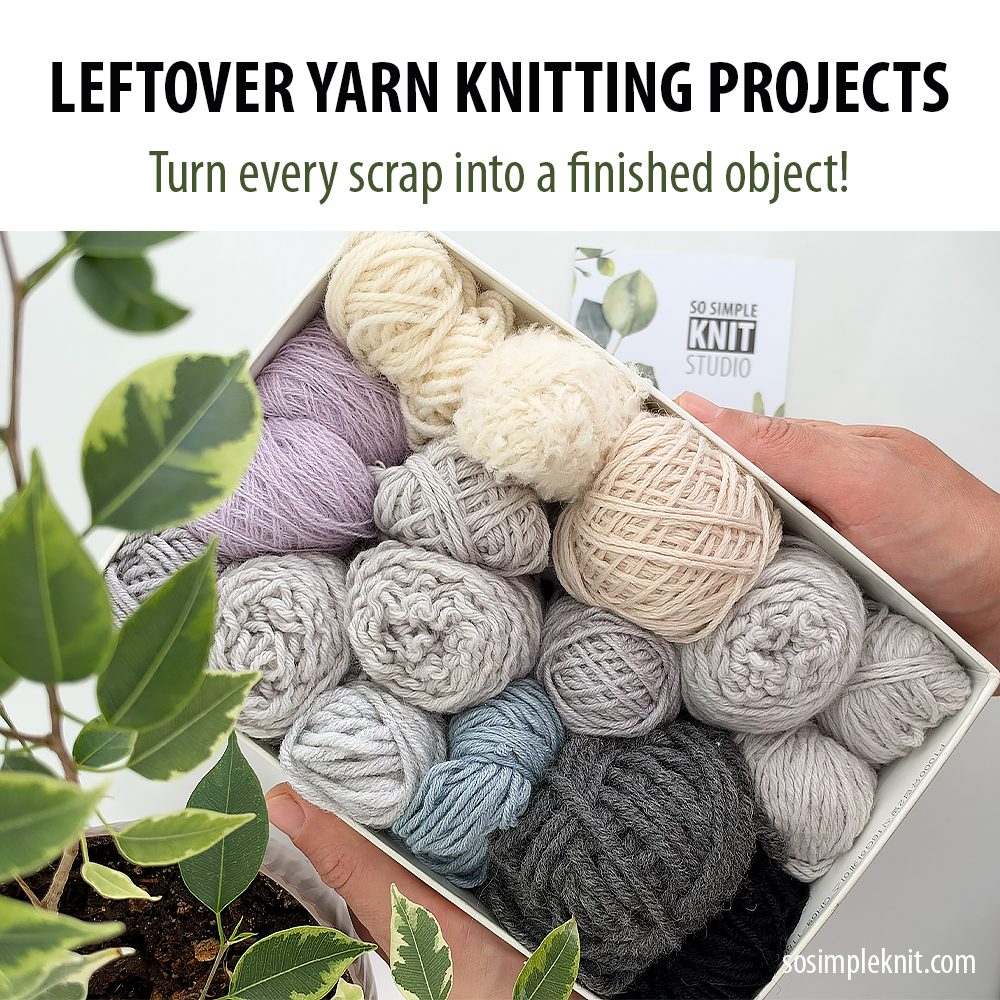
Let me guess what's happening in your yarn room right now. There's a box, or a bag, or a shelf, or an increasingly suspicious cardboard drawer: full of little balls and ends and "just enough for a cuff" leftovers. You keep them because every single one came from a project you finished and loved. Throwing them away feels like throwing away the memory. It’s a pity to throw it away, but you have no idea where else it could go.
Today I want to share the leftover yarn knitting projects that actually work for me — the ones that get scraps out of the box and into the world, instead of just moving them from one basket to another.
And no, this is not a "10 genius scrap yarn ideas to bust your stash" list where you save it and never return. Each idea below tells you roughly how much yarn it eats, so you can match your actual leftovers to an actual finished object. That's the whole trick: scraps stop being scraps the moment they have a job.
First: sort by size, not by color
Before any project, I do one quick sort into three piles:
- Tiny bits — good for embroidery, French knots, stuffing, pom poms, crochet chains for provisional cast-on;
- Medium ends — enough for a cuff, a toe, a toy limb, a flower, a coaster corner to corner;
- Almost-skeins — a third of a ball or more. These become wearables.
Next, sort each pile by yarn weight, because weight is what decides what a scrap can become:
- Lace and fingering weight — too thin for a blanket, perfect for embroidery, crochet-chain cords, and delicate summer bandanas. Sock-weight leftovers love stripes on cuffs and toes;
- Sport and DK — the universal workhorses: toys, coasters, napkin rings, dishcloths, hair ties. Almost every small project in this article lives here;
- Worsted and bulky — the fast ones. Garter-stitch blanket strips, mug rugs, pot holders, chunky coasters.
Scrap yarn blankets: the long game that's actually mindless
A blanket is the classic answer to "best scrap yarn projects" and for good reason, it's the only project that will accept any yarn, any color, any quantity, with zero judgment.
One of the most versatile blanket options is the 10 Stitch Blanket by Frankie Brown, completely free on Ravelry. The pattern has been translated into 13 languages, so it’s suitable for everyone. You cast on ten stitches and just knit. Every time a scrap runs out, you join the next one and keep going. Ten stitches wide, row after row, and before you know it, you have a lap blanket made entirely of finished projects. It's the most forgiving pattern I know: no shaping, no counting, no mistakes possible. If you've ever wanted a "TV or YouTube knitting" project that forgives you for being tired, this is it.
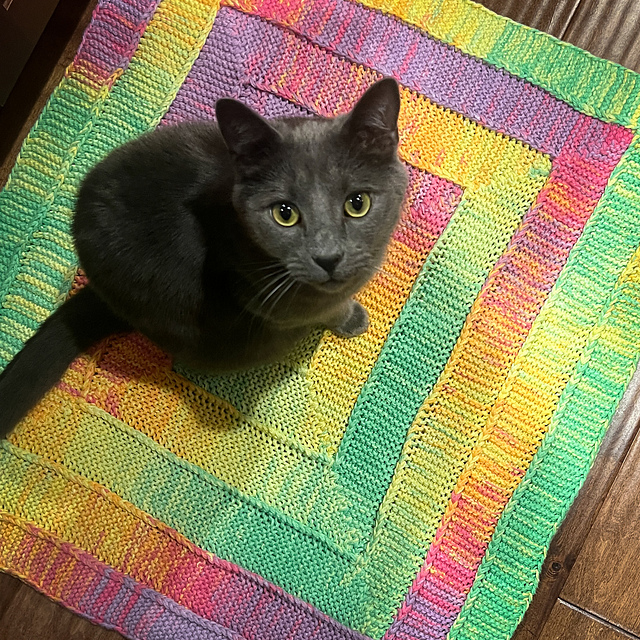
10 stitch blanket by Chris (padd82 on Ravelry)
Two tips that make or break a scrappy blanket:
- Join yarn properly. I use a weaver's knot for nearly everything — here's my step-by-step on how to join yarn so nothing comes undone later.
- Make magic knot balls. Wind several scraps together into one ball with small knots, and knit with two strands for a "marled" look. The random color changes that people worry about are exactly what makes these blankets beautiful.
If a full blanket feels like a commitment, knit mitered squares or hexipuffs instead: only you decide later whether it becomes a blanket, a cushion top, or a wall hanging. Modular knitting is scrap busting with a built-in finish line very quickly.
Home decor and other accessories: several evenings, many scraps, one useful thing
If you want a scrap gone with a result you'll actually use, make home accessories: pillows, pillow covers, coasters and trivets, pot holders, towels. They're easy and mistakes are invisible.
You can knit a fun, long snake using leftover yarn: simply alternate stripes of different-colored yarn and stuff the snake with filling as you go. The Snake pattern, by Sarah Ann Thompson, is completely free and can be downloaded from Ravelry:
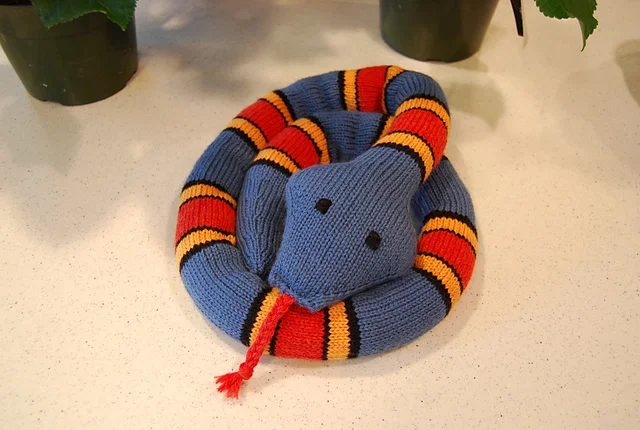
Striped Snake knitting pattern by Sarah Ann Thompson
Of course, small knitted toys can be used as Christmas tree ornaments or as a festive garland.
Knitted mini carrots by sosimpleknit.com
My project’s collection includes several patterns that are perfect for using up leftover yarn, while also resulting in practical items for home and kitchen decor.
- Knitted Leaf Coaster Pattern (about 20 g) — my beginner favorite. One evening, one small ball, and your morning coffee has a place to land. Make six from six leftovers and you've got a housewarming gift.
- Pumpkin Coaster Knitting Pattern (about 30-35 g) — orange scrap + green stem scrap, done. Fall decor and a real mug rug in one.
- Set of 3 Knitted Dishcloths Pattern (about 30-40 g) — cotton leftovers have exactly one natural home, and it's a dishcloth.
- Carrot Napkin Ring Knitting Pattern and Holly Napkin Ring Knitting Pattern (less than 20 g) — Easter and Christmas tables built from scrap.
- Carnation Flower Pattern (about 15 g) — make a handmade card with Carnation Flower for Mother’s Day or a napkin ring to decorate the festive table.
Small toys: the fastest way to make a scrap disappear
This is where my stash goes fastest, and honestly, it's the most fun. Small stuffed toys are scrap machines: most of them take less than half a skein, and the leftovers from toys are so tiny that almost nothing survives to feel guilty about.
You can knit toys for your pets, for example, a mouse or a ball for a cat, or a bone or a dumbbell for a dog.
- Honey Bee Knitting Pattern (about 15-20 g) — my most-loved little project (5.0★ from 31 knitters!). One body, two wings — you can knit a whole apiary from sock-weight leftovers.
- Mini Carrot Knitting Pattern and Amigurumi Carrot Knitting Pattern (about 20 g) — orange body, green top, two scraps done. They make incredible stocking stuffers, plant-decor "veggies," and Easter table favors.
- Fly Agaric Mushroom Knitting Pattern (about 30 g) — red cap, cream stem. The polka dots are little stitches of white scrap, so even 10 cm of white yarn has a job.
- Halloween Bat Toy Knitting Pattern and Spider Knitting Pattern (about 25-30 g) — black yarn is the scrap nobody ever has enough of and always has left over from something.
- Christmas Gnome Knitting Pattern and Christmas Deer Knitting Pattern (about 30-40 g)— striped hats, scarves and little booties are made for contrasting leftovers. A December evening, two gnomes, three scraps gone.
Instead of finding a project and hunting for yarn, look at your scrap basket and ask "what could you become?".
Scraps with a job bigger than you: knitting for others
Knitters all over the world send their scraps where they do real good — and you can too.
Hospitals in a lot of countries accept knitted hats for newborns. The "28 Stitches" club in Kazakhstan, for instance, is a volunteer movement whose members knit wool items such as hats, booties, and vests—and donate them to perinatal centers for premature infants (weighing between 500g and 2kg). The garments are made from 100% wool to help stimulate the babies' blood circulation, as volunteers believe it helps. Volunteers also craft small, cotton-made octopus toys, which the infants can grasp, helping to stimulate their fingers. NICU caps are the original scrap project (one hat = one small ball, done in an evening).
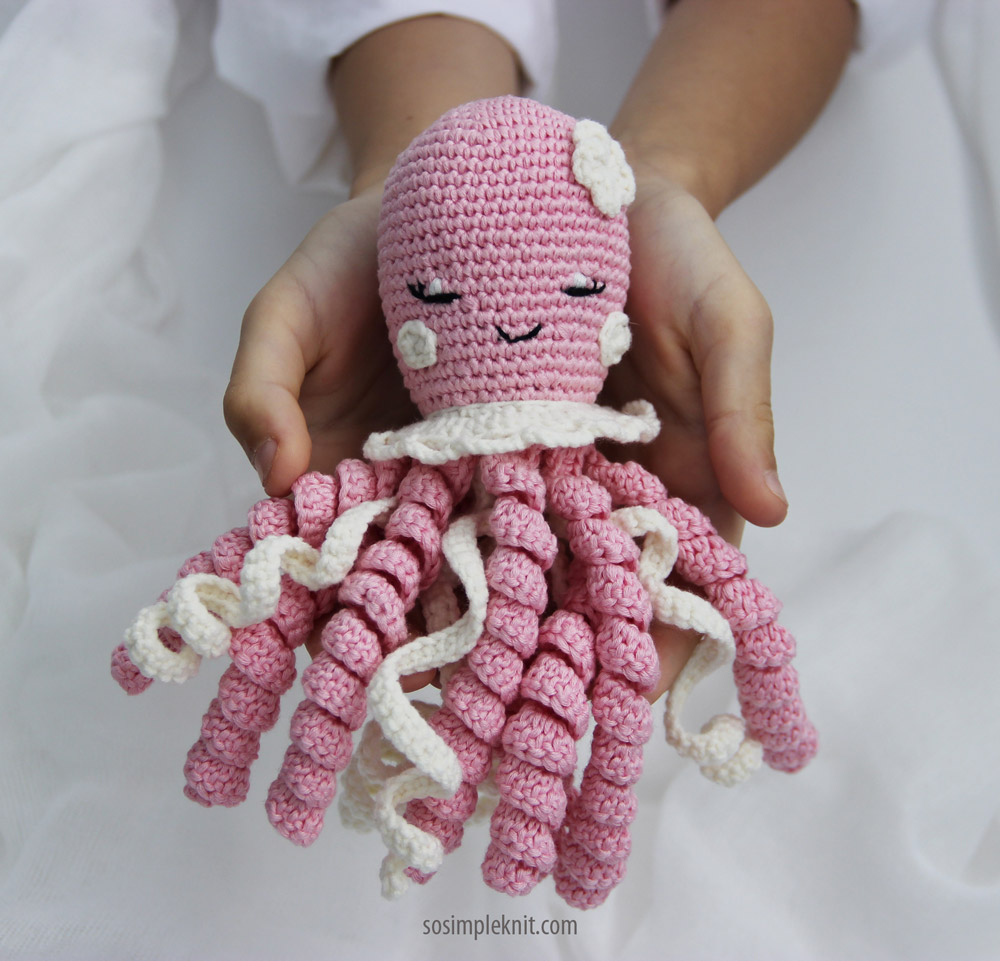 Cancer clinics have "knit in public" heart walls — many knitters knit little hearts from leftovers and hang them at clinic entrances for people going through treatment. Hospices take lap blankets. Children's charities take tiny toys.
Little keyrings, bag charms and accessories
Do you have bits so small they're clearly not a coaster, not a cuff, not anything?
- Turn them into a Chicken Keychain Knitting Pattern or a Bee Knitting Pattern as a keyring. One of my customers knitted 24 little bees for the children in her group: "I knitted 24 of these for my Rainbow Guides when they earned their beekeeper badge, they loved them";
- A key holder knitting pattern in miniature — it uses up literally grams of yarn and makes somebody smile every time they touch their keys;
- You can use even very small leftover bits of yarn to knit hair ties, they’re both attractive and practical;
- Small toys can also be used as car ornaments. Hang one from your rearview mirror to suit your mood, the season or a particular holiday.
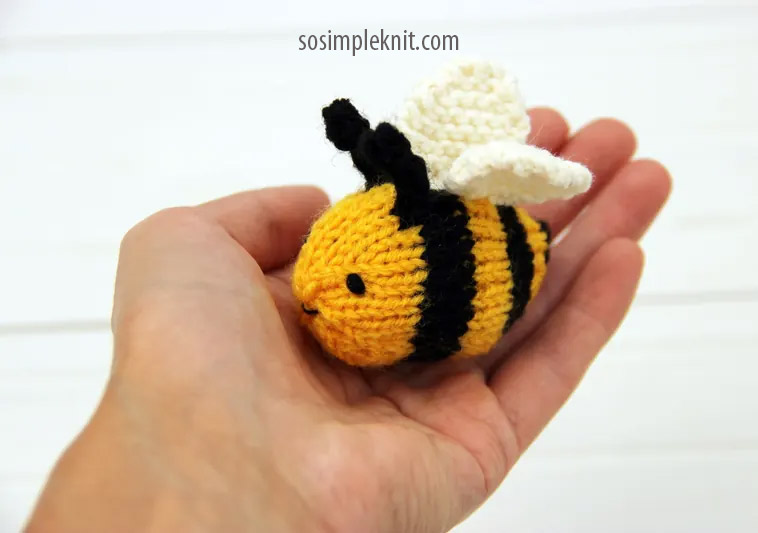
Bee Knitting Pattern by sosimpleknit.com
Tiny bits also have three other jobs: pom poms (on hats, on gift wraps instead of plastic bows, on a plain bag), stuffing, and embroidery.
Wearables: what to knit with "almost-skeins"
When a leftover is a third of a ball or more, aim for something you'll wear — these are the scrap yarn knitting projects you'll actually wear, not just display:
- A striped or marled hat or bandana. This bandana knitting pattern is for a simple triangular bandana that requires about 35-40 grams of yarn to make;
- You can knit fingerless mittens and use a contrasting-colored yarn for the cuffs: it’s both unique and practical;
- Socks. Leftover sock yarn becomes contrast heels, toes and cuffs;
- Mini scarfs. You could knit a miniature, French-style scarf. For instance, the "Sophie Scarf" by designer PetiteKnit is currently very popular. It’s a truly beginner-friendly paid project that’s perfect for using up leftover yarn.
A little about birds
You'll see advice to put scrap yarn out for nesting birds — please research before you do, because this well-meant idea can harm birds. Synthetic yarn doesn't rot, long strands entangle legs, and even natural fibers hold moisture against chicks. If you want to help, offer pet hair combings, short pieces of untreated natural wool. When in doubt: keep the scraps for toys.
Your next step
Here's my challenge, and it's a small one: tonight, take one scrap from the box — not the biggest, the one you feel most guilty about — and give it a job. A leaf coaster. A carrot. A bee. A chicken on a keyring.
Start with something that takes one evening: browse the beginner patterns in the shop — every one of them comes with step-by-step photos, video lessons for the tricky parts, and the kind of instructions I'd give a friend sitting next to me with needles in hand. That's exactly why hundreds of knitters rate my patterns 4.9★, and why beginners who were scared of "scrappy projects" finish them and come back for another.
Best regards, Nataly