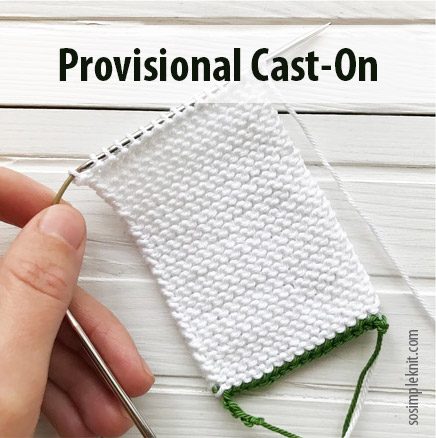
At some point, I discovered a really convenient way to cast on stitches using a crochet hook—and I’ve been using it ever since.
This provisional cast-on stitches method lets you start your knitting quickly, while keeping the edge flexible for later. The stitches remain «live», which gives you so many more options as you continue working on your project.
For example, you can:
- add a ribbing later and choose the best style once the piece is already knitted;
- create a neat folded hem;
- join pieces seamlessly using the mattress stitch;
- or simply bind off the stitches in whatever way works best for you.
For example, I used a provisional cast-on when knitting the base for an Easter carrot napkin ring. Once the piece was finished, I simply transferred the live stitches from the waste yarn back onto my needle and joined the edges. The result was a clean, seamless finish without any extra seaming—such a simple and satisfying solution.
In this article, I’ll show you how this provisional cast-on method works, why it’s so useful, and where you can apply it in your projects.
What is a Provisional Cast-On with a Crochet Hook
A provisional cast-on using a crochet hook is a method of casting on stitches in a way that allows you to unravel them later and use them again, while continuing to knit your main piece.
Unlike a traditional cast-on, the stitches are not “permanently fixed” but remain live (open).
Using a crochet hook, you create a chain that holds the stitches securely. Later, you simply unravel the chain by pulling the correct end, and you’re left with open stitches that can be picked up onto your knitting needles.
This way, you’re not locking in the beginning of your work—you’re giving yourself the flexibility to return to it whenever you need.
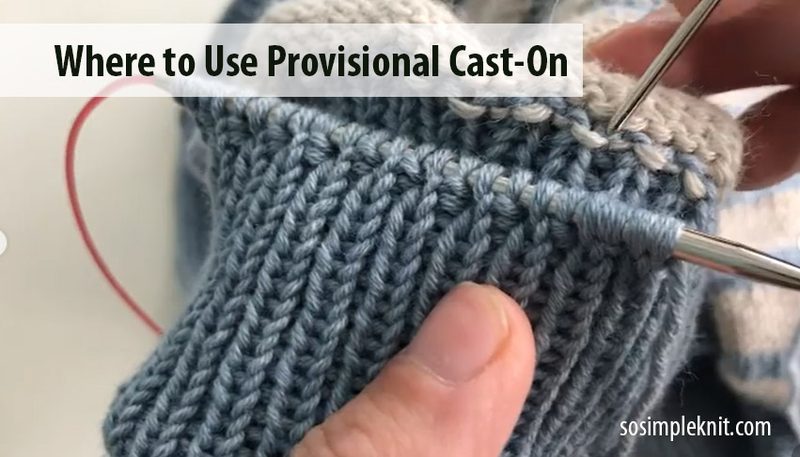
Where Can You Use a Provisional Cast-On?
A provisional cast-on is actually a great way to give yourself a backup option (just like Scarlett O’Hara said, “I’ll think about it tomorrow”), and you can use it in many different situations.
One of the most common uses is when you need to join two edges with an invisible grafting technique (stitch-to-stitch seam).
Another case is when you haven’t yet decided how you want to finish your edge—for example, if you’re choosing which type of ribbing will work best for your sweater.
The provisional cast-on method is also helpful when you’re unsure about the length of your piece. You can always return to the live stitches, place them back on your needles, and continue knitting to adjust the length.
So, a provisional cast-on using a crochet hook can be used in the following cases:
- when knitting fingerless gloves or gloves, to adjust cuff length or create an elastic edge;
- when knitting sweaters and pullovers, to choose the best design for cuffs and hems;
- when knitting scarves, allowing you to add fringe from the open stitches;
- when knitting toys or decorative pieces where you need a seamless stitch-to-stitch join.
As you can see, this technique is incredibly versatile.
How to Do a Provisional Cast-On with a Crochet Hook
Tools you’ll need:
- main yarn for your project;
- contrasting yarn of a similar weight for the provisional cast-on. Using a contrasting color makes it much easier to see your stitches, pick them up neatly, and unravel the crochet chain later without any confusion.
- a crochet hook in a size suitable for your yarn;
- knitting needles in the required size;
- scissors.
Provisional Cast On technique — keeps cast-on stitches «live» so that they can be knit or bind-off later. A provisional cast-on is temporary and can be unravelled to reveal live stitches that can be knitted in the opposite direction. This Cast on still uses waste yarn and a crochet hook, and it's super-fast and you only have to work with one yarn at a time.
So, let’s go through the provisional cast-on with a crochet hook step by step:
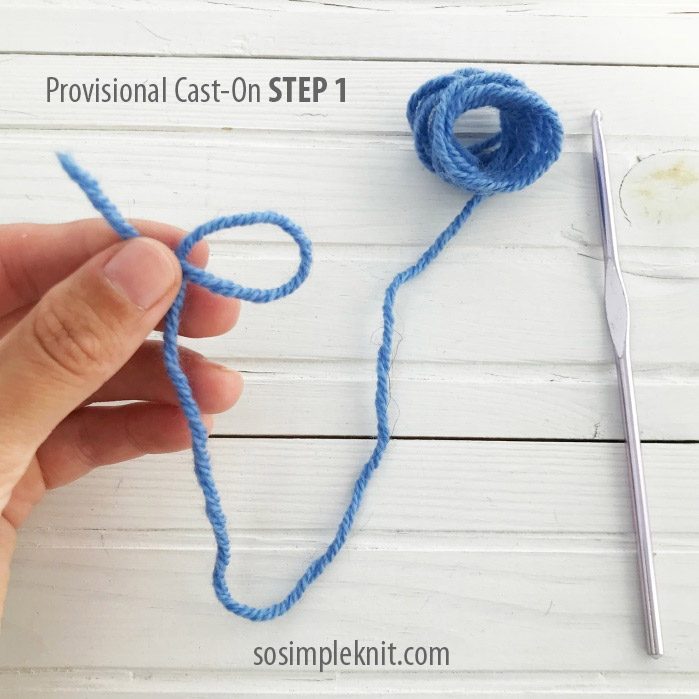
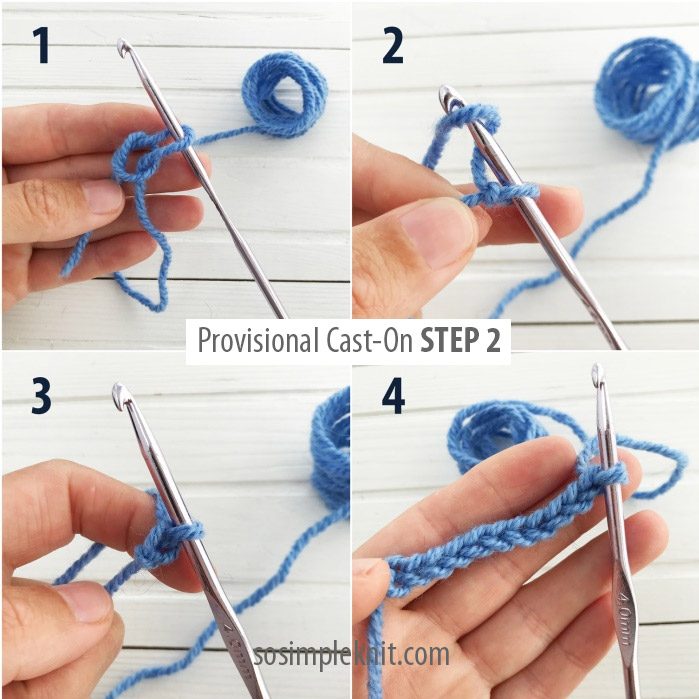
Step 1: Using waste yarn, create a slip knot and put it on a crochet hook the same size as your intended knitting needles, being careful not to make it too tight.
Step 2: Crochet a chain stitches slightly more than the number of stitches you need to cast on. Pull the thread through the last loop of the chain, securing the end from unraveling.
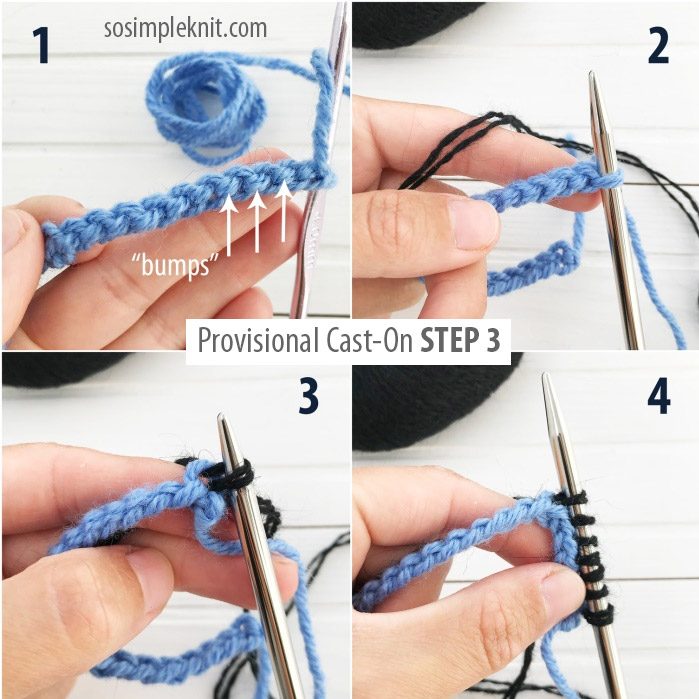
Step 3: Take knitting needle and main yarn and pick up required number of stitches up from crocheted chain on the other side from «bumps».
To give you an even clearer understanding of this method, I’ve prepared a video showing in detail how to create the crochet chain, pick up stitches onto your needle, and then work with the open edge. See video below:
Sometimes one technique can make a big difference. The provisional cast-on with a crochet hook is exactly such a case. Using this method, your knitting becomes neater and much more flexible.
Try this technique in your own projects, and check out my patterns — they’re designed for beginners but also contain plenty of useful tips for more advanced knitters. Following the tutorials is easy and enjoyable.
Happy Knitting, Nataly!